CABIN in the CITY

“For me, that dream is a small cabin sitting beside a stream in Greer, Arizona.”

Something that I noticed several years ago was that my relatives and my wife’s kin who resided in rural areas, wisely made plans once they reached retirement age, on moving closer to towns and cities with medical facilities. Those who did seem to have benefited from such.

Joleen’s aunts and uncles in Kansas are a prime example. I’m sure Lee and Joan Mills would’ve rather stayed on their Chapman farm, yet common sense dictated that they finally give up the serenity for closer access to the Abilene Hospital. This seemed to pay off for them as they both lived long, fruitful lives. Lee was 96 and Joan 94.

I decided to research the statistics of remaining in the country versus moving to a town or city. What I found made me glad that we haven’t picked up stakes and relocated to an oasis floating around in my head. For me, that dream is a small log cabin in the rugged White Mountains, sitting beside a stream in Greer, Arizona.

Studies show that access to timely medical care is crucial for the health and survival of older adults. One significant factor that can influence outcomes in emergency situations and chronic disease management is the distance an individual lives from a hospital.

For older adults, rapid access to healthcare can be the difference between life and death, especially in cases of heart attack, stroke, or other acute medical emergencies. Proximity to a hospital not only ensures faster emergency response but also facilitates better management of chronic illnesses through regular checkups and access to specialized care.

Several studies have examined the relationship between hospital proximity and mortality rates among older populations. While exact statistics vary by region and healthcare system, the general findings are consistent:

  • Older adults living within 5 miles of a hospital have improved survival rates following acute medical events. For example, studies suggest that the one-year survival rate after a heart attack is up to 15% higher for individuals living close to a hospital compared to those residing more than 20 miles away.
  • Emergency response times are significantly shorter for people living near hospitals, which is associated with better outcomes in time-sensitive conditions such as stroke. The likelihood of receiving life-saving treatments within the critical window is much greater for those closer to medical facilities.
  • Chronic disease management is more effective for older adults living near hospitals, leading to lower overall mortality rates. Regular access to healthcare providers helps in early detection, routine monitoring, and adherence to treatment plans.
  • Rural versus urban differences: Older adults in rural areas, who often live farther from hospitals, experience higher mortality rates for many conditions compared to their urban counterparts. The disparity is most pronounced for emergencies requiring immediate care.

While living close to a hospital generally improves survival odds, other factors also play important roles, such as:

  • Quality and capacity of the hospital
  • Availability of transportation
  • Socioeconomic status and insurance coverage
  • Presence of support networks (family, caregivers)

In conclusion, older adults residing near hospitals have statistically higher survival rates, especially for acute medical emergencies and chronic disease management. The closer proximity allows for faster access to life-saving interventions and ongoing healthcare, which directly contributes to better outcomes and longevity.

These findings highlight the importance of improving healthcare accessibility for elderly populations, particularly in rural and underserved areas, to reduce disparities in survival rates. I’m very thankful that Havasu Regional Medical Center (HRMC) is only 4.3 miles away from where we live.

Having been to the emergency room several times, had I lived in remote Greer and incurred the same medical problems, I wouldn’t be writing this column. Although there’s no stream or trees outside our front window like there would be in the White Mountains, I can still toss a couple of logs in the never-used fireplace, and jokingly refer to our house in Havasu as a cabin in the city!

SUTPHEN’S MILL, KANSAS?

“You might say we’re somewhat partial to the place, with Joleen’s dad and mom getting married in Sutphen Mill Church.”

Sutphen’s Mill?

A vintage lithograph postcard, circa 1910, was sent or given to Mr. Harry Trumpower of Independence, Kansas, by Olive Keller. There’s no stamp or postmark on the card. On the front shows an old grist mill, with a polite and thankful message from Olive, reading,

“Many thanks for the pretty birthday card you sent me. I was so pleased to think that you all remembered me. Your friend Olive Keller”

Olive A. Keller was born on May 8, 1889, in Winston, Kansas. Her parents were Oliver and Daisy Keller. The family moved to Independence, Kansas, soon after she was born.

Olive married Harry Elliott in September 1913. The couple had three children. Sadly, Harry and Olive divorced in 1939, with Olive, at the age of 61, having to work as a maid for the Charles McGonikie family. Mr. McGonikie was a wealthy business owner. Olive died on December 6, 1977, at the age of 88. She’s buried in Independence.

The postcard recipient, Harry Bailey Trumpower, was born April 24, 1893. He was four years younger than Olive. The young man evidently took a liking to Miss Keller and gave her a special card. Things didn’t go his way romantically, perhaps, because Harry was only 17 and Olive was 21.

With things not working out as he planned, Harry married Edith Johnson on May 29, 1926. They remained together for life until Harry passed away on July 27, 1977. Ironically, this is the same year that Olive died. Olive’s ex-husband, Harry Elliott, died in 1965.

The grist mill on the front of Olive Keller’s postcard isn’t identified, but I believe it could be Sutphen’s Mill in Dickinson County. There’s no way to prove this, because I am not aware of a surviving picture to compare it with. Even if it’s not, the photograph is representative of how this mill might’ve once looked.

I visited the Sutphen’s Mill location in the 1980s with my father-in-law, and all that remained was a stone foundation. You might say we’re somewhat partial to the place, with Joleen’s dad and mom getting married in Sutphen Mill Church.

Sutphen Mill is a small unincorporated community, a ghost town, located in Dickinson County, Kansas. Though little-known today, Sutphen Mill has a unique history tied to the rural development of central Kansas and the importance of water-powered mills in the 19th century. A church and cemetery remain.

Sutphen Mill was established in the late 1800s by W.H. Sutphen and Orville Sutphen, during a period of intense westward settlement and agricultural expansion in Kansas. The community was named for its most significant feature: the Sutphen Mill, a gristmill built along Chapman Creek. This mill processed local farmers’ grain, serving as a central economic and social hub for the surrounding rural area.

Grain mills played a crucial role in the development of rural Kansas, providing local farmers with the means to process wheat, corn, and other grains into flour and meal.

The presence of a reliable water source, like Chapman Creek, was vital, and the construction of Sutphen Mill attracted settlers seeking both economic opportunity and community. The mill’s location near transportation routes also contributed to its early growth.

At its height, Sutphen Mill supported a small but active community. In addition to the mill, the area featured homes, a schoolhouse, and a post office. Like many rural Kansas communities, life revolved around agriculture, with social events often centered at the mill or local school. Local residents formed a tight-knit community, relying on one another for trade, labor, and socialization.

Over time, technological advancements and the consolidation of agricultural processing led to the decline of small local mills. The rise of railroads, improved roads, and larger commercial mills in nearby towns reduced the need for small, water-powered operations like Sutphen Mill.

By the early 20th century, the mill ceased operation, and the community’s population dwindled as families moved to larger towns in search of new opportunities.

Today, Sutphen Mill stands as a reminder of the many small, rural communities that once dotted the Kansas landscape. While few physical remains of the mill or community exist, Sutphen Mill’s legacy lives on in local histories and the memories of the families whose lives were shaped by its presence.

Sutphen Mill, Kansas, is representative of the pioneering spirit that shaped the American Midwest. Its history reflects the critical role of agriculture, water-powered industry, and community in settling and developing rural Kansas.

Though small and now largely forgotten, Sutphen Mill played a significant part in the story of Dickinson County and the wider region.

1879

HEPLER, KANSAS

“Hepler, Kansas, is a small rural community nestled in Crawford County in the southeastern region of the state.”

A picture postcard sent on July 23, 1954, from Hepler, Kansas, to Au Gres, Michigan, shows a cowboy riding herd over some cattle in “The Wheat State.” The card senders were Walter and Joyce, with their last name unidentified.

The message says,

“Hi – Having a wonderful time. The county down here is pretty dry. There hoping for rain. Hope to see you. Walter & Joyce”

The card recipient was Mr. and Mrs. Lindy Russelt of Au Gres. Lindbergh “Lindy” Russelt was born on June 27, 1927, to Peter and Meta Russelt. Lindy became a farmer like his father. Lindy married Marie Hohn in 1949, with her passing away on October 3, 1977. Seventeen days later, he married Romance Ernestine Slacker. Lindbergh E. Russelt died on June 23, 1986, at the age of 59.

There’s not a whole lot of information on Lindbergh Russelt. With me unable to positively identify who Walter and Joyce were, although I ‘believe’ them to be Walter and Joyce Miller from St. Clair, Michigan, the two towns on the postcard were more than interesting enough to research.

Hepler, Kansas, is a small rural community nestled in Crawford County in the southeastern region of the state. Though modest in size, Hepler has a rich and enduring history that reflects the broader trends of development, resilience, and community spirit found throughout Kansas.

Hepler was established in the late 19th century, during a period marked by westward expansion and the settlement of the Great Plains. The town was officially platted in 1871 and named after B. F. Hepler, a prominent early settler and influential figure in the region. Like many Kansas communities, Hepler’s early years were shaped by agriculture, with settlers attracted by the promise of fertile land and the opportunity for prosperity.

The arrival of the railroad was a pivotal moment in Hepler’s history. The Missouri-Kansas-Texas Railroad (often called the “Katy”) reached the town in the 1870s, providing a crucial link for transporting crops, livestock, and goods to larger markets. The railroad not only boosted the local economy but also facilitated the growth of Hepler as a trading and service center for surrounding farms.

In its heyday, Hepler boasted a range of amenities and businesses, including general stores, blacksmiths, schools, churches, and grain elevators. The town’s residents were known for their close-knit relationships and community-oriented activities. Social events, such as church gatherings, school plays, and local fairs, were central to life in Hepler and contributed to its enduring sense of identity.

Like many small towns in rural America, Hepler faced challenges as the 20th century progressed. Mechanization in agriculture, changes in transportation, and urban migration resulted in population declines and the closure of many local businesses. Despite these hardships, Hepler’s residents continued to demonstrate resilience, adapting to changing times while maintaining their community spirit.

Today, Hepler remains a testament to the enduring values of rural Kansas. While its population is smaller than in the past, the town’s history is preserved in its buildings, traditions, and the memories of its residents. Annual events and gatherings continue to bring people together, celebrating the town’s heritage and keeping its history alive for future generations.

The story of Hepler, Kansas, is one of perseverance, adaptation, and community. From its founding in the 1870s to the present day, Hepler reflects the broader narrative of many small American towns—rooted in the land, shaped by the railroad, and sustained by the strength of its people.

Au Gres, Michigan, is a small city located in Arenac County along the shores of Lake Huron in the northeastern part of the state. The area’s history dates back to the early 19th century, when it served as a stopping point for French fur traders navigating the Au Gres River. The city’s name, derived from the French “aux grès” meaning “with sandstone,” reflects the region’s distinctive geological features.

Settlement increased during the mid-1800s as lumbering and fishing became central to the local economy, attracting families seeking opportunity in Michigan’s burgeoning northern frontier.

As the lumber industry flourished, Au Gres grew into a vital community, with sawmills, shipping docks, and various businesses springing up to serve both residents and visitors. The arrival of the railroad in the late 1800s further spurred growth, making transportation of goods and people more accessible.

Over the years, as lumbering declined, the community transitioned to agriculture and tourism, capitalizing on its proximity to Lake Huron and the Au Gres River. Today, Au Gres is known for its recreational opportunities, annual events, and strong sense of community, all of which continue to honor and celebrate its rich historical heritage.

SCHWEITZER – PACKARD – FREEMAN – CONNECTION

“1930 – 1950 census records show that Ernst Rudolph “Rudy” Schweitzer lived next to the Packard mother and daughters for several years.”

Circa 1910

Born in 1830, Augustus Franklin Packard was an influential individual in the early development of Enterprise, Kansas. While detailed records about his life are limited, available accounts recognize him as a significant contributor to the growth and character of this small Kansas community.

Little is known about Augustus Packard’s early years or his background before arriving in Enterprise, Kansas. Like many settlers during the late 19th century, he likely came to Kansas seeking new opportunities in agriculture, business, or community development as the state was rapidly expanding during this period.

Packard became associated with several civic and business endeavors in Enterprise. The town itself was founded in the 1860s and quickly became a center for grain milling and trade in Dickinson County. Augustus Packard reportedly played a role in supporting local infrastructure projects and was involved in the social and economic life of the community.

Augustus Packard’s impact on Enterprise is remembered through local histories and, in some cases, through family stories and records. He contributed to the establishment of lasting institutions and set an example of leadership during a formative time for both the town and the region. His legacy is intertwined with the growth of Enterprise from a frontier settlement into a stable and prosperous Kansas community.

The legacy of Augustus Packard is a testament to the spirit of early Kansas pioneers. While many specific details of his life may be lost to history, his contributions to Enterprise, Kansas, remain part of the broader story of the American Midwest’s development.

Packard’s 1913 obituary mentions him as being one of the first settlers in Dickinson County. The Dickinson County Museum bestows that honor to George Freeman, my wife’s GG Grandfather. They both moved to the area around the same time. These two settlers were likely acquainted with each other.

Augustus Franklin Packard’s obituary reads as follows, with several grammar corrections:

“Journal 16 Oct 1913; born 9 Nov 1830, Athens Co, Ohio; moved to Dickinson county 1856; was one of the first settlers here; served in territorial legislature and was first county clerk; married 29 Jan 1875 to Alice B. Tuton of Baltimore, Md; had 4 children, Anita, Helen, Alice & Augustus F., all of whom survive; married 2nd Mrs. Sarah Matt; had 3 children, Clarence E., Elmer L. & Pearl I., all of whom survive; died 10 Oct 1913 in Dickinson County; also survived by 2 sisters, Mrs. Annie Winters & Mrs. Mary Adams, both of Dickinson County; Mrs. Adams died 13 Oct 1913. Packard genealogy at DCHS, son of George Washington Packard & Elizabeth Oliver, was a half-brother of Thomas O. Floyd. Augustus divorced both his wives; he is buried next to his mother, Elizabeth Packard, and his sister Mary Adams.”

In all, Augustus had seven children. A picture postcard sent by one of these daughters to another in 1910 from Longford, Kansas, was thoroughly researched. The recipient was Alice Packard, with the sender only identifying herself as “sister.”

A picture on the front of the card shows a one-room Longford school, with the complete class standing beside it and their teacher. The postcard reads:

“March 25, 1910

Dear sister,

Here is a lot of children at our school. My four are here. Can you find them. Josie is here now. Yes, Birtre lives in Topeka. All are well. Will write more soon. Your sister”

Alice B. Packard was born in July 1880 to parents Augustus and Alice Belle Packard. Having her mother’s name made it difficult to research things. One of Alice’s brothers was also named after her father, making for a similar problem.

After Alice’s father divorced their mother and remarried, the three girls and their mom lived together for the rest of their lives. The message sent on that postcard regarding her four children was confusing because none of the Packard girls ever married or had kids, including their half-sister, Pearl. Perhaps they were adopted?

1930 – 1950 census records show that Ernst Rudolph “Rudy” Schweitzer lived next to the Packard mother and daughters for several years.  Rudy Schweitzer is my wife’s GG Uncle on the Schweitzer side. It’s most likely he helped the Packard women out during this time.

Alice Belle Tuton-Packard died on March 30, 1931. Her daughter, Alice B. Packard, the postcard recipient, passed away on August 9, 1856, while Helen died in 1961, and Anita passed away in 1963. They’re all buried in Enterprise.

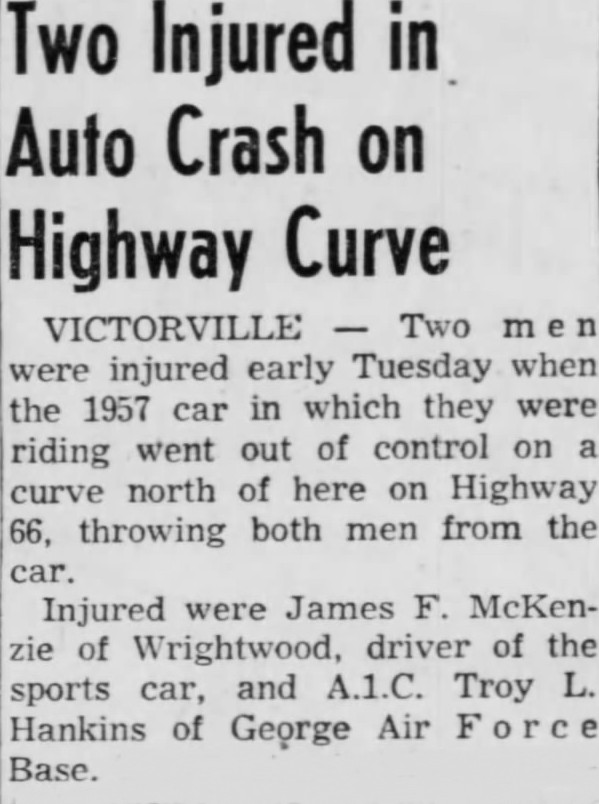
On a side note, Elmer Packard, a son from the second marriage of Augustus Packard, after coming into his share of inheritance money from the sale of his father’s estate, which was sizable, purchased a fast car (at that time) from Topeka. Soon after, he rolled the vehicle, with it killing him and injuring a passenger.

1916
Apperson “Jackrabbit” runabout

HAVASU CITY RESORT – 1966

“It’s doubtful that Nellie Pierce ever received or read Nancy’s message.”

Artist’s depiction of Havasu City Resort

Lake Havasu City, located in western Arizona on the shores of the stunning Lake Havasu, has become a popular destination for travelers seeking relaxation, adventure, and scenic beauty. Among the many accommodations available, Havasu City Resort, now called Nautical Inn, stands out as a top choice for visitors looking for comfort, amenities, and access to local attractions.

Nautical Inn offers a wide array of amenities designed to suit families, couples, and solo travelers alike. The resort typically features modern and spacious rooms, some with lake views or direct access to the beach.

The resort’s prime location allows guests to explore several local attractions. Lake Havasu itself is ideal for boating, fishing, and swimming. The famed London Bridge, which was relocated from England in the 1970s, is a must-see historic site and provides a picturesque backdrop for photos and leisurely strolls. The area also boasts hiking trails, golf courses, and vibrant nightlife, ensuring there is something for everyone.

Guests can enjoy outdoor pools, hot tubs, fitness centers, and on-site dining options. Many resorts in the area also provide water sports equipment rentals, such as jet skis and paddleboards, along with boats.

Nautical Inn is a popular venue for weddings, business conferences, and family reunions. Many resorts offer event planning services, banquet facilities, and outdoor spaces to accommodate gatherings of various sizes. The beautiful scenery and pleasant climate make Lake Havasu City an ideal setting for memorable occasions.

Lake Havasu City is accessible by car from major cities such as Phoenix, Las Vegas, and Los Angeles. The resort provides convenient parking and may offer shuttle services to nearby attractions. Local transportation options include taxis, ride-shares, and boat taxis for lake excursions.

The Nautical Inn provides guests with a perfect blend of relaxation and adventure in one of Arizona’s most scenic destinations. With its comfortable accommodations, diverse amenities, and proximity to natural and cultural attractions, it is an excellent choice for travelers seeking an unforgettable experience in Lake Havasu City.

A picture postcard, showing a painting of the Nautical Inn, was sent to Nellie M. Pierce, at 207 First Avenue, in Joliet, Illinois, on May 12, 1966. A typewritten message on the front, written by someone named Nancy, says:

“5-12-66

Dear Nellie, No letter from you yesterday; how are you enjoying the cold weather; we have been enjoying some dark drizzly days but today is lovely. Al went to 29 Palms today and I wish I could have gone too. Hope you have a good weekend. Love Nancy”

Strangely enough, it’s doubtful that Nellie Pierce ever received or read Nancy’s message, because the postcard recipient had been dead for four months. Nellie M. Dunlap was born on September 10, 1892. Her occupation was a library assistant and then librarian, according to census records and archived newspaper accounts.

Nellie married Glen Pierce around 1924. He died a few years before his wife. Miss Nellie M. Dunlap-Pierce passed away on January 21, 1966. She was 73.

KANSAS, SCHOOLMARMS

“Teaching was one of the few respectable professions available to women at the time…”

Brookville, Kansas – Circa 1908

The story of early Kansas one-room school teachers is a vital chapter in the development of education across the American Midwest. These educators, often working in isolated and challenging environments, played a crucial role in shaping generations of students and helping to build strong, resilient communities. Their dedication and adaptability laid the foundation for modern education in Kansas and beyond.

In the mid-19th century, as settlers streamed into Kansas, communities quickly recognized the need for accessible education. With limited resources and sparse populations, the one-room schoolhouse became the most practical solution.

These small structures were typically built by local families and served children of all ages, often from as far as several miles away. The teacher was not only an educator but also a central figure in community life.

Early Kansas school teachers were predominantly women, many of whom were young and unmarried. Teaching was one of the few respectable professions available to women at the time, offering an opportunity for independence and personal growth. Male teachers were less common but often taught in larger communities or advanced subjects.

Teachers faced rigorous expectations. They were responsible for instructing students in a variety of subjects, including reading, writing, arithmetic, geography, and history. Their days began early, as they often had to clean the schoolhouse, start the fire, and prepare the space before students arrived. In addition to teaching, they managed disciplinary matters, organized community events, and sometimes even cared for sick children.

Life as a one-room school teacher in Kansas was demanding. The pay was meager, and teachers often boarded with local families or lived in modest accommodations nearby. Transportation was limited, so teachers walked long distances or rode horses to reach their schools. Winters could be harsh, and keeping the schoolhouse warm was an ongoing challenge.

The school year was typically organized around the agricultural calendar. Children were often required to help with planting and harvesting, so attendance fluctuated according to the season. Teachers adapted lessons to meet the needs of students who ranged widely in age and ability, providing personalized instruction and fostering a close-knit learning environment.

Most early Kansas teachers received minimal formal training. Some had attended teacher institutes or normal schools, but many relied on their own education and the support of community members. Certification requirements varied, but teachers were often evaluated by local school boards through examinations and classroom observations.

The influence of one-room school teachers extended far beyond academics. They were leaders, role models, and often advocates for community improvement. Schoolhouses doubled as meeting places for church services, social gatherings, and town meetings. Through their work, teachers helped instill values of perseverance, civic responsibility, and lifelong learning.

By the early 20th century, Kansas began to consolidate its rural schools, gradually replacing one-room schoolhouses with larger, centralized institutions. The legacy of the early one-room school teachers, however, remains embedded in Kansas history. Their commitment to education and community continues to inspire educators today.

Early Kansas one-room school teachers were pioneers in every sense of the word. They overcame adversity, educated generations of children, and helped build the character of rural communities. Their stories remind us of the enduring power of education and the profound influence dedicated teachers can have on society.

Edith Dow and Helen Rollman taught in one-room schools. They could be called ‘schoolmarms’ in a positive sense of this definition. A picture postcard that Helen sent Edith from Brookville, Kansas, on January 2, 1908, is job-related, along with being personal.

The two women were close friends, as newspaper articles indicate. The front of the card shows a street in Brookville. Helen’s message on the back reads as follows:

“Yes, I intend to go back Sat. I am going to spend my spare time in Salina in the dentist. I know you envy me. Have you the key to the cupboard at school? If so could you please leave it at Carlin’s Drug Store for me? Would like to get at some of my books. Helen”

Miss Edith W. Dow was born April 29, 1887, at Salina. Kansas, to parents, Ezra and Florence. She was a graduate of Salina High School, Class of 1905. Edith lived all her life in Salina except for 25 years spent teaching in Boulder, Colorado.

Before moving to Colorado, she taught for two years at Assaria and five years at Salina. Miss Dow studied at Emporia State University, Colorado University, and the University of Northern Colorado. During all of this time, she never married.

Edith Walker Dow died November 7, 1981, at Presbyterian Manor in Salina. She was a member of the First Presbyterian Church, the P.E.O. Sisterhood, Delta Kappa Gamma, National and State Retired Teachers Associations, Saline County Historical Society, and Daughters of the American Revolution.

Born in 1888, the card sender, Helen K. Rollman, came from a family with educational ties. Her father, Professor Thilon J. Rollman, had been a teacher before becoming Superintendent of Brookville Schools. He was also the town treasurer of Brookville. One of six children, Helen followed in Professor Thilon’s footsteps.

Miss Rollman graduated from Kansas State Teachers’ College, with her teaching beginning in 1914 at Salina, Brookville, Quincy, and Polk public schools. Like Edith Dow, she never married. Helen retired in 1953, and she passed away on May 15, 1980, in Topeka, at the age of 92.


LONGFORD, KANSAS

“The card was postmarked in Longford 117 years ago, on October 16, 1908.”

Longford, Kansas, circa 1908

Longford, Kansas, is a small town situated in Clay County in the central part of the state. Like many rural communities in the American Midwest, Longford’s history reflects the broader patterns of settlement, growth, and change that shaped Kansas and the surrounding region.

The area that would become Longford was originally inhabited by Native American tribes, including the Kansa and Pawnee. European-American settlers began arriving in the mid-19th century, drawn by the promise of fertile farmland and the opportunities provided by the Homestead Act.

Longford was officially founded in the late 1800s, with the establishment of a post office in 1870 marking its emergence as a recognized community.

Longford’s growth was closely tied to the expansion of the railroad. The arrival of the Atchison, Topeka, and Santa Fe Railway facilitated access to markets and helped the community thrive. The railroad enabled local farmers to ship their products to distant buyers, and businesses soon sprang up around the depot, including general stores, blacksmiths, and grain elevators.

By the early 20th century, Longford had become a center of rural life in Clay County. Schools, churches, and civic organizations formed the backbone of the town’s social structure.

The Longford Rodeo, first held in the 1940s, became a beloved local tradition and continues to draw visitors from across the region each year. Community events and gatherings have long been an important aspect of life in Longford, fostering a sense of neighborliness and shared identity.

Like many small towns in Kansas, Longford experienced challenges during the 20th century. Advances in agriculture led to fewer farming jobs, and many residents moved to larger cities in search of work. Despite these changes, Longford has remained resilient, adapting to new economic realities while maintaining its rural charm.

Today, Longford is recognized for its tight-knit community and its enduring traditions. While its population is small, the town’s spirit is evident in its annual rodeo, community projects, and efforts to preserve its history. Longford serves as a reminder of the enduring legacy of small towns in American life, where history, culture, and community continue to shape the present.

The history of Longford, Kansas, is a testament to the perseverance and adaptability of rural America. From its origins as a railroad town to its present-day identity, Longford has weathered the changes of time while holding on to its distinctive character and community spirit.

Altha Falen lived in Longford. She sent her cousin, Virgil Hodges, in Oceano, California, a picture postcard showing the north part of town. The card was postmarked in Longford 117 years ago, on October 16, 1908. The message to Virgil says:

“10-15-1908

Dear cousin: I wish to thank you for the card you sent me of “apricot drying.” This is a view of Longford which is 4 miles west. The weather is very hot and dry here. I suppose you have heard from Lawrence, He started on his hunting trip the 8th. Altha Falen”

Altha was born on October 5, 1880, to Phillip Elmer and Sarah Jane Hodges-Falen. There were four other siblings, three girls and one boy. According to census records, Altha completed public education through 8th grade, yet never married or held down a paying job.

When their father died in 1910, the family moved to town. In later years, Altha lived with her mother and an older sister, Melma Melina “Millie” Falen, and they often traveled together. Her brother was named Lawrence, while the other two sisters were Lela and Effie.

It seems reasonable that their mother’s house in Longford became Millie and Altha’s after their mom’s death. In a will prepared by their father, before his death, Millie and Altha were to get 115 acres of land, including a fair amount of cash. This was only to take place after their mom died. How the two sisters sustained themselves for so many years without working is a mystery.

Altha Catherine Falen died on October 15, 1962. Millie passed away on August 4, 1953. Both are buried next to each other in Althelstane Township Cemetery.

Virgil Ulysses Hodges was Altha’s cousin. Living in Oceano, California, for most of his life, he was a photographer, with many of his photographs now featured in local Lompoc museums. Virgil was born on September 29, 1879, and passed away 95 years later on April 3, 1975.

Altha and Millie

LORRAINE, KANSAS

“These crews, made up mostly of young men, moved about the country harvesting farmers’ grains and corn.”

Threshing wheat – 1908

Lorraine, Kansas, is a small city located in Ellsworth County. It was founded in the late 19th century, with its origins tied closely to the expansion of the railroad and the settlement of agricultural communities in central Kansas.

The town was named after the region of Lorraine in France, reflecting the heritage of some of its early settlers. Over the years, Lorraine has maintained its rural character, serving as a local hub for farming and community life in the area. Currently, 137 people live in the community.

A picture postcard sent to Mrs. Pet Miller in Lorraine, Kansas, on August 2, 1909, shows a steam-powered threshing machine on the front with seven or more crew members. The card was mailed from Ellsworth, Kansas, by Mrs. J.F. Baker. A handwritten message inside reads,

“Dear Mrs. Miller

Well we are here. Just made it by the skin of our teeth. The boys on the engine came to meet us. See my white dress and said they could hear my feet rattle, so good bye!

Mrs. J.F. Baker”

Mrs. Pet Miller was the wife of Peter Daniel Miller. Early on, he went by the nickname of Pet, as an advertisement for funeral supplies shows. Mrs. Miller’s real name was Ida. She was born in Germany in 1857, and Peter was born in Wisconsin in 1858. The two married in 1898.

Pete and Ida Miller owned their own business for a short time in Lorraine before selling out and moving to Manhattan, Kansas. At this point, he was a traveling salesman for automobiles and farm equipment. The couple had two boys, Arthur and Edward. Peter died in 1928 at the age of 70, while Ida passed away in 1936. She was 77.

Mrs. J.F. Baker was the wife of Joseph Francis Baker. Her real name was Maria Catherine Kennedy. Married in 1899, the couple moved around the state before finally settling in Nemaha County. They had four children, Clara, John, William, and Paul. Maria was evidently just arriving in Ellsworth when she picked up the postcard.

Although they lived in Missouri, Joseph Francis Baker might have been on a threshing crew, as his wife’s message suggests. She was undoubtedly just visiting town, perhaps cooking for the boys.

These crews, made up mostly of young men, moved about the country harvesting farmers’ grains and corn. Tired of all the traveling and sleeping in wagons of hay, Joseph eventually settled down and purchased his own farm in Nemaha County.

J.F. Baker was born in 1858 and died in 1927, at the age of 69. Much younger, Maria was born in 1876 and died in 1945. She was also 69. They’re both buried at St. Francis Cemetery in Nemaha County, Kansas.

The picture postcard that Ida Baker sent to Ida Miller is quite rare. I was fortunate to be able to find it.

BROOKVILLE, HOTEL

“Gustaf and Mary Mae Magnuson ran the Central Hotel in town…”

The Brookville Hotel in Brookville, Kansas, began its storied journey as the Central Hotel. Originally serving travelers and townspeople alike, the hotel quickly gained a reputation for its welcoming atmosphere and hearty home-cooked meals.

A picture postcard sent to Mr. M.P. Sanborn from Brookville, Kansas, in 1907, shows a photograph of the corner of Anderson Avenue and Perry Street in Brookville, with the Central Hotel visible. A message written across the front says,

I arrived safely. Mr. Magnuson was the depot to meet me. Weather cool. Feeling fine. Mr. and Mrs. Magnuson send their best regards in you. As ever, your cousin, Tilman”

Malte Peterson Sanborn was one of Chapman’s most well-known and respected residents. Born on March 26, 1857, in Sweden, he married Mary E. Phipps on March 25, 1886. She died in 1893. The couple had one child.

Mr. Sanborn remarried Anna Mary Phelps in 1896. They had three children. Malte and his wife owned a successful lumber business in Chapman. M.P. Sanborn was also involved in town politics, serving as a councilman.

Malte died on April 24, 1918. Anna Mary Phelps-Sanborn passed away on August 11, 1934. Both are buried at Indian Hill Cemetery in Chapman. I could not locate M.P. Sanborn’s cousin, Tillman.

Gustaf and Mary Mae Magnuson ran the Central Hotel in town, which later became known as the Brookville Hotel. In later years, it was considered to have one of the best restaurants in the entire state of Kansas. Many celebrities ate there, including “Buffalo Bill” Cody and John Wayne.

I was fortunate to also dine at this historic business with my wife’s family, before it moved to Abilene, Kansas, and then closed. Joleen was able to get the recipes for some of their exquisite dishes, especially fried chicken and creamed corn. She still serves them during holidays and special occasions.

Gustaf Magnuson was born in Sweden on December 3, 1864, in the same town as Malte Peterson Sanborn. The two men and their wives were friends. Gustaf passed away on September 15, 1933. He was 68.

Gustaf’s wife, Mary Mae, was born on November 27, 1873, in Pennsylvania. She died at the age of 60 on September 10, 1934. The couple had four children, Harry, Helen, Walter, and Leone. Gustaf and Mary are both buried in Brookville.

The Brookville Hotel building still stands, although it’s no longer used. Stingy Brookville town residents are responsible for the restaurant moving to Abilene, by voting not to help build a much-needed sewer line.

A few thousand dollars of tax revenue used towards such would’ve undoubtedly kept the business afloat. Over the years, thousands of dollars were lost, as tourists, hungry for a chicken dinner, no longer stopped in Brookville.

Such poor decisions come from those folks having no future vision for their town or city. They could’ve learned a lot from Council Grove town officials.

2024
1950s
1908

BAVARIA, KANSAS

“Today, Bavaria still remains an unincorporated area, a ghost town.”

A 1908 picture postcard mailed from Bavaria, Kansas, to Ellsworth, Kansas, has a photograph of Anderson Avenue and City Park on the front, which is actually located in Brookville, Kansas. Brookville is in Saline County, like Bavaria and Ellsworth.

Bavaria, Kansas, is now a small unincorporated community located in central Kansas. Despite its regress, Bavaria has a rich and interesting history that reflects the development of rural communities throughout the American Midwest.

Bavaria was established in the 1860s during a time of rapid settlement and expansion in Kansas. Many of the first settlers in the area were of German descent, which is reflected in the community’s name—Bavaria, after the region in Germany. The town was strategically located near the Smoky Hill River, which provided vital water resources for agriculture and livestock.

In the late 19th century, Bavaria grew to include a post office, general store, and several other businesses serving local farmers and residents. The arrival of the railroad in Saline County helped foster growth and made it easier for residents to transport goods and travel to larger cities, such as nearby Salina.

The post office in Bavaria was established in 1867 and operated until 1960, serving as a hub for communication and commerce in the area. The community developed a reputation for being close-knit, with local churches and schools playing a central role in daily life.

As the 20th century progressed, Bavaria—like many small rural communities—faced challenges due to changes in agriculture, transportation, and population trends. The consolidation of farms, improvements in highways, and increased mobility led many residents to move to larger towns and cities. By the mid-20th century, Bavaria’s population had declined, and many of its businesses closed.

Today, Bavaria still remains an unincorporated area, a ghost town, with its historical significance preserved in local records and memories. Though small, it continues to be a symbol of the pioneering spirit and community values that shaped rural Kansas.

While Bavaria may no longer be a bustling place, its legacy lives on through its contributions to the region’s agricultural development and the stories of the families who once called it home. The old schoolhouse, now torn down, and other historical landmarks still standing, serve as reminders of the community’s vibrant past.

Mrs. Friend Hoover in Ellsworth was the recipient of her husband’s postcard. He was either in Bavaria or Brookville on business, having picked up the Brookville card at their local railroad depot.

“Sept 1, 1909

You will see us all tomorrow morning if nothing happens at lest that was the arrangement Saturday when I left the girls.”

Friend Herman Hoover was born in Greenleaf, Kansas, on February 22, 1887. Friend’s mother and father were Herman and Mary Elizabeth. Married on March 21, 1912, they had three children, Leroy, Herman, and Joyce.

During his work cycle, Friend worked as a farmer, at the Ellsworth Salt Works as foreman and fireman, culminating his career at retirement age as a tire repairman in an Ellsworth service station. He died in Ellsworth on September 18, 1960, at the age of 73.

Emma Mary Barkow-Hoover was born on October 21, 1884, in Ellsworth. She passed away on December 25, 1961. Emma was 76. Both Friend and Emma are buried in the Ellsworth Cemetery.

The Bavaria school, before it was torn down.
Railroad depot